
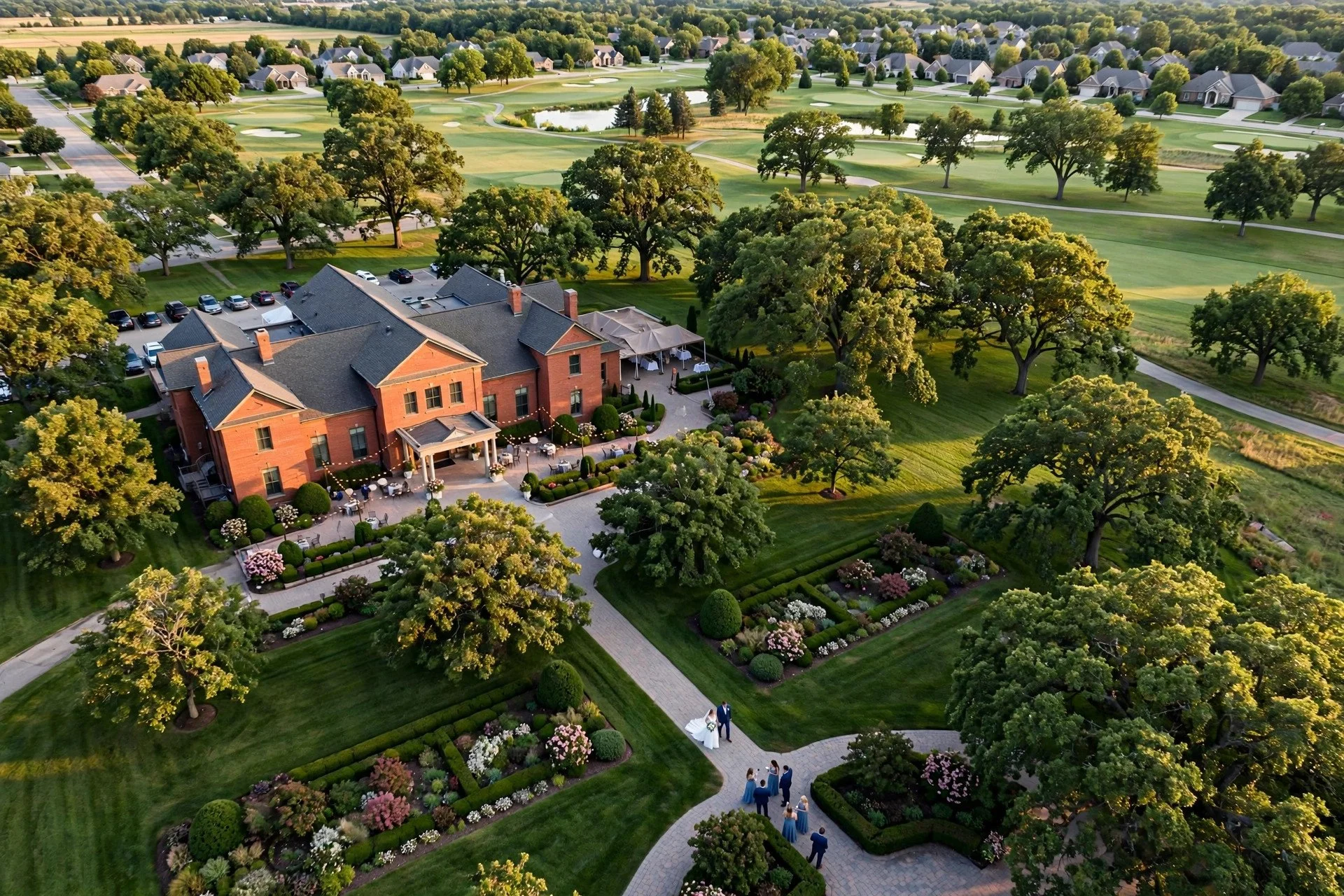
Short answer: Usually, yes — if your venue allows it, the airspace is clear, and your pilot is licensed and insured. Drone footage isn't automatic at every Illinois venue, so it's worth asking early instead of assuming it can happen on the day.
What does drone footage actually add?
Drone shots work best as the opening and in-between moments of your film:
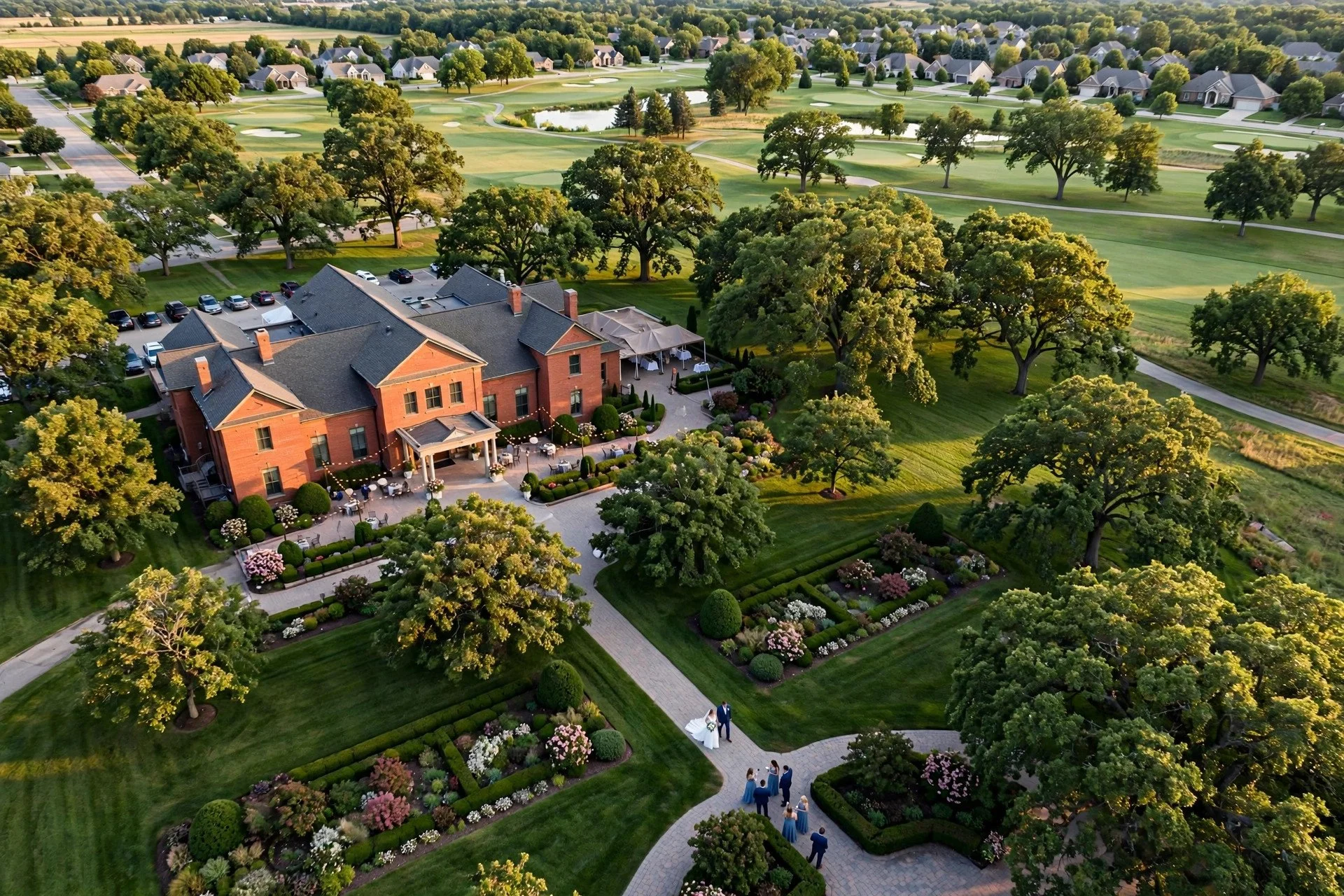
Your venue from above: The full property, gardens, lake, or golf course in one wide shot
Your location in context: A brick downtown, tree-lined street, or countryside around your ceremony
Arrivals and portraits: You walking together, your wedding party outside, guests arriving
A cinematic opener: Sets the scene before the getting-ready and ceremony footage begins
It's an add-on to your ground coverage, not a replacement for it. Your vows, toasts, and reactions still come from cameras on the ground. You can see how aerial shots fit into a finished film on my wedding videos page.
What can stop a drone from flying?
A few real-world limits come up in Illinois:
Venue rules: Some venues, forest preserves, park districts, and historic properties ban drones or require a permit and proof of insurance
Airspace: Venues near O'Hare, Midway, and smaller airports sit in controlled airspace that needs FAA authorization — sometimes it isn't granted
Weather: High wind, rain, and snow ground a drone. Midwest weather can change fast, even on a good forecast
Safety: A licensed pilot won't fly directly over a crowd of guests, near power lines, or in the dark without proper clearance
Timing and noise: Drones are audible. Most pilots fly before guests arrive or during portraits, not during your vows
Does my videographer need a license?
For paid wedding work, yes.
FAA Part 107: Anyone flying a drone commercially in the U.S. needs this FAA remote pilot certificate
Registration and insurance: The drone should be registered, and the pilot should carry liability insurance — many venues ask to see it
Local permission: Your venue may also want the flight approved in advance, not sorted out on the day
If someone offers drone footage with no license or insurance, that's a risk for you and your venue. It's a fair question to ask before you book — I cover more good booking questions in my reviews and approach.
When should I ask about it?
Ask as early as you can:
Before you book: Confirm drone coverage is available as an add-on for your date
When you choose your venue: Ask the venue directly if drones are allowed and if a permit is needed
A few weeks out: Your videographer can check the airspace for your venue address and plan the best flight window
That lead time matters, especially for venues in busy Chicago-area airspace or on public land.
What happens if the drone can't fly that day?
Have a simple backup plan:
Ground footage still tells the story: Wide shots from the ground cover your venue beautifully
No last-minute promises: A good videographer will be honest that morning if wind or airspace rules it out
Ask about the policy upfront: Know before you book what happens to the add-on if weather grounds the flight
The honest take: When it works, drone footage gives your film a sense of place nothing else matches. It just needs the venue, the weather, and the paperwork to line up.
Want drone footage in your wedding film?
Tell me your venue when you reach out, and I'll let you know what's possible there. Get pricing and availability for your date and compare packages to see how drone coverage can fit your day. You can also learn more about how I work before you decide.