
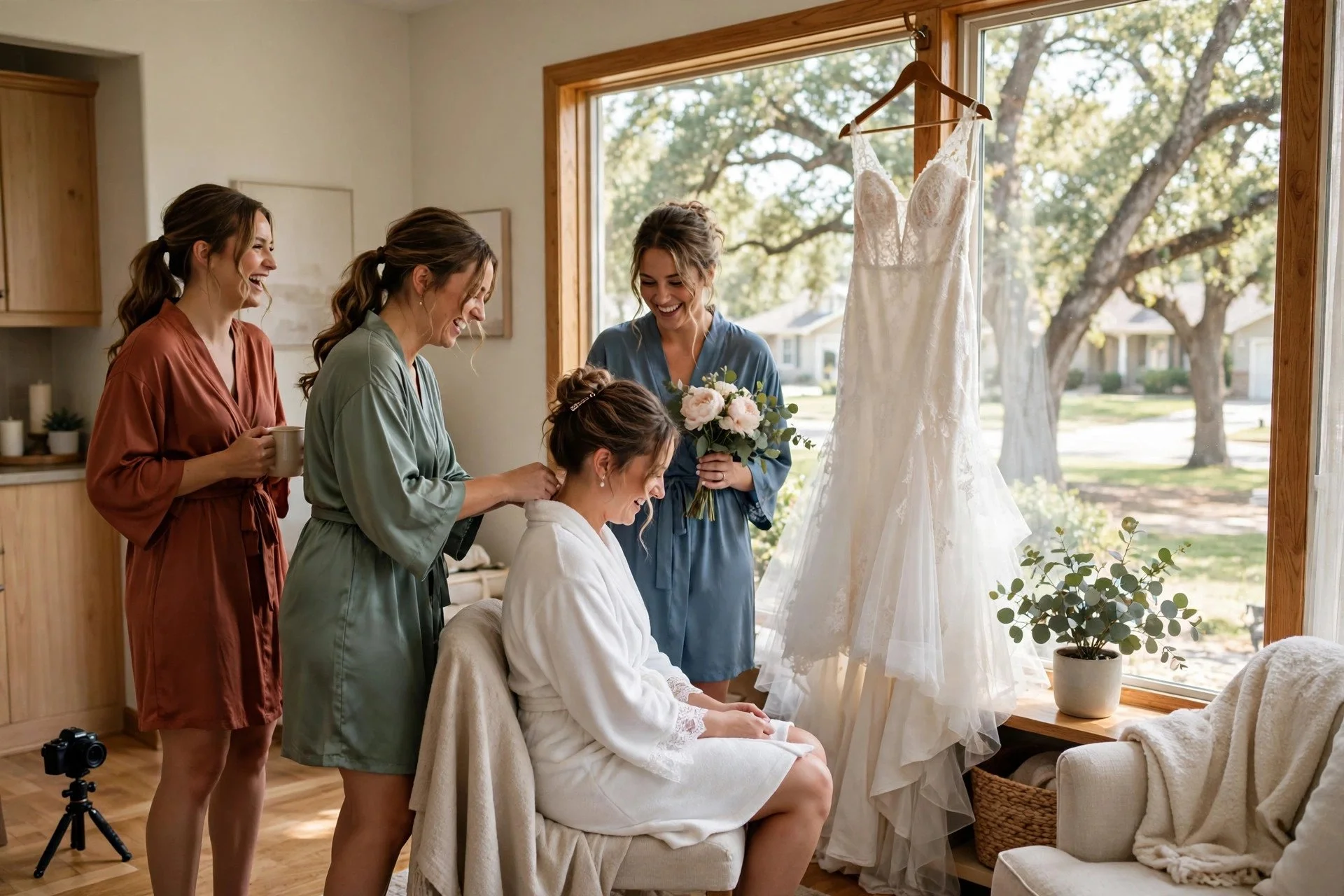
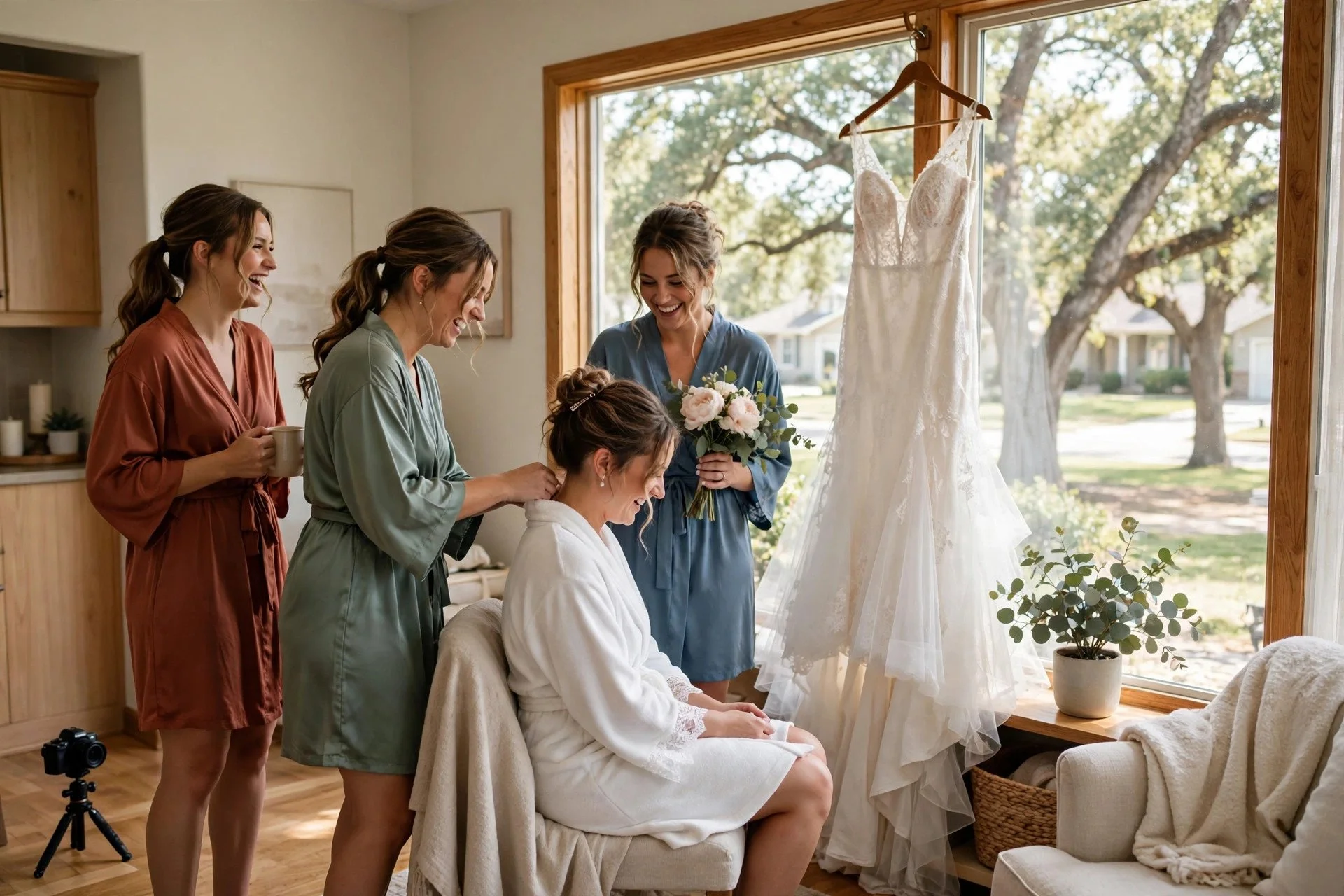
Short answer: Capture the real morning story, not just hair and makeup — the dress going on, letters and gifts being opened, a parent's first look, and the quiet nerves right before you leave. Those 60–90 minutes set the tone for your whole film and are the part couples rewatch most.
The getting-ready moments couples love most
These are the clips that almost always make the highlight film:
- Hair and makeup finishing touches: Not the whole process — just the final moments when it all comes together
- The dress or suit going on: Buttons, zippers, cufflinks, and the help from mom, a sister, or your best friend
- Shoes, jewelry, and perfume/cologne: Small details that take two seconds on the day but look great on video
- A toast with your wedding party: Coffee, mimosas, or just a quick laugh before things get formal
- Stepping out ready: That first full look in the mirror before you head to the ceremony or first look
You can see how these moments open a finished film on my wedding videos page
Don't skip the other partner's morning
Getting ready is not just one side of the story:
- Both locations matter: If you're getting ready in two places, plan coverage for both — or stagger the times so one videographer can do both
- Groom details count too: Tie, watch, shoes, and a quick toast with groomsmen balance the film
- Travel time matters: Two locations far apart need extra time built in, or a second shooter
If you're deciding between one videographer and two, my package comparison page shows how the coverage options differ.
The emotional moments you can't stage
The best getting-ready footage is usually unplanned:
- Reading a letter or opening a gift from your partner
- A parent seeing you dressed for the first time
- Bridesmaids' or groomsmen's reaction when you walk out ready
- A quiet minute alone right before you leave — nerves, excitement, all of it
Tip: If you're exchanging letters or gifts, tell your videographer ahead of time. I just need to be in the room with audio ready — you don't need to perform it.
The details that set the scene
A few detail shots take five minutes and help your editor build the opening of your film:
- Dress or suit hanging up, shoes, rings, invitation suite, and bouquet together
- Something borrowed / something blue, family heirlooms, or a photo of a loved one on your bouquet
- The room itself — a bright window, a clean corner, your venue or home in the morning light
Clear one tidy spot near natural light for these. It makes a bigger difference than any filter.
How to make getting-ready coverage easy
- Start coverage 60–90 minutes before you need to leave: That's enough for final touches without filming hours of hair and makeup
- Keep the room as clear as you can: Bags and breakfast in one corner, getting ready in the other
- Have details gathered in one place when your videographer arrives
- Build in buffer: Getting ready almost always runs 15–20 minutes behind — plan for it
Not sure how many hours that means for your timeline? Check my pricing page for how coverage is structured.
The honest take: You don't need every minute filmed. You need the last hour done well — the people, the details, and the reactions. That's the part that makes the rest of the film feel personal.
Want getting-ready coverage that feels natural, not staged?
Tell me where you're getting ready, when your ceremony starts, and whether you're doing a first look, and I'll help you plan the right start time. Check pricing and availability for your date — and compare packages to see your options.