
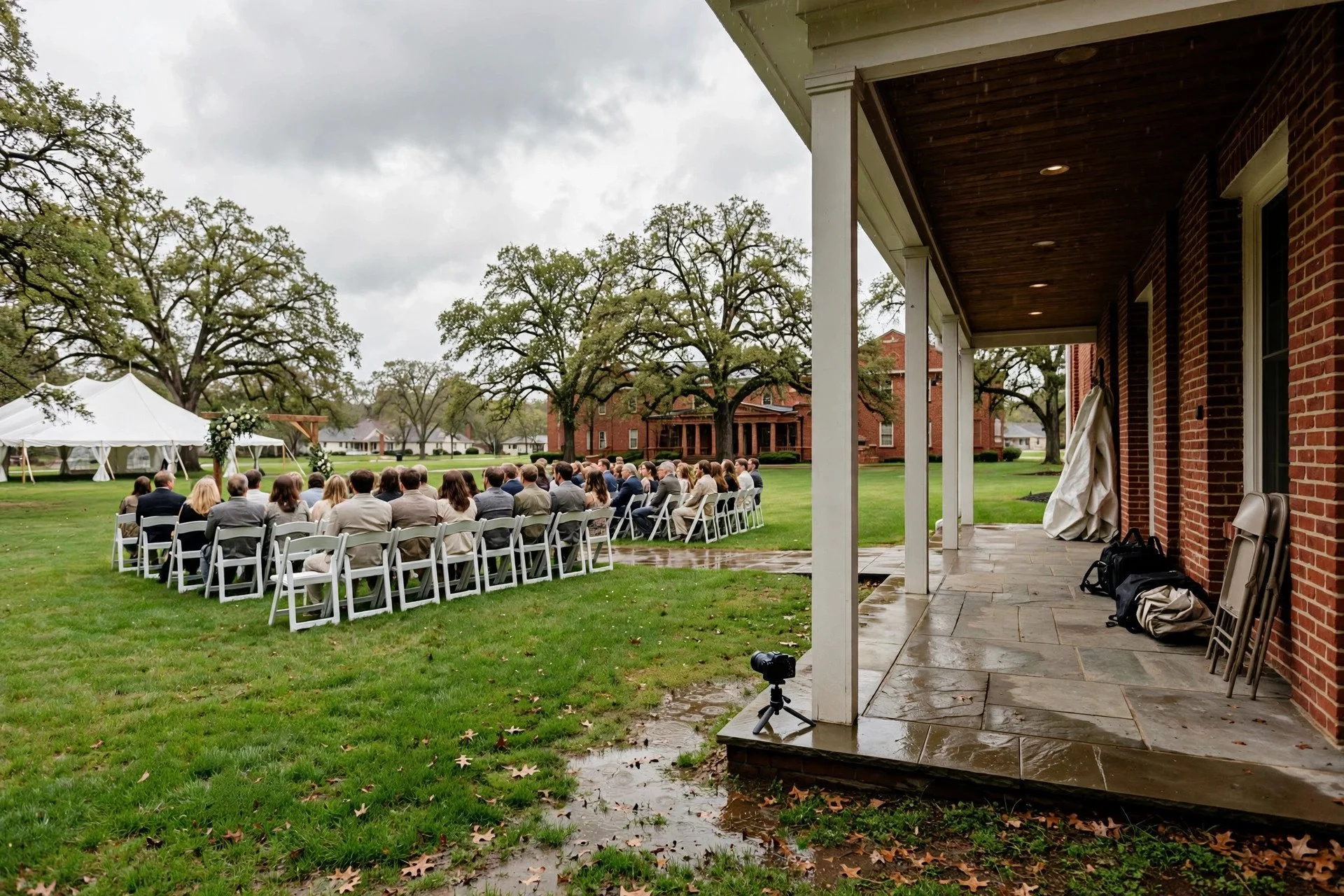
Short answer: I plan for the weather you hope for and the weather you might get. That means watching the forecast all week, protecting gear and audio, having covered and indoor backup spots scouted, and keeping the timeline flexible — so rain, wind, or heat doesn't cost you the moments that matter.
What do you check before the wedding day?
I start watching early so nothing is a surprise:
- Forecast from 7 days out: I track rain, wind, heat, and storm timing — not just "will it rain"
- Hour-by-hour look the day before: Ceremony and portrait windows matter most
- Venue backup plan: Does the venue have a tent, covered patio, or indoor ceremony option?
- Sunset and light: Clouds change golden hour fast, so I plan portrait timing around it
If the forecast looks rough, I'll check in so we can talk through the backup plan before the day gets hectic.
What happens if it rains during the ceremony?
Rain doesn't cancel good video — it just changes where and how we film:
- Covered positions: I film from under a tent edge, patio, or doorway whenever possible
- Gear protection: Cameras and audio get rain covers — my setup is a small DSLR on a tripod, so it's easy to move and protect
- Audio still comes first: I use protected mic placements so vows stay clear even if it's drizzling
- Short downpour plan: Sometimes waiting 10–15 minutes is all it takes in the Midwest
Some of my favorite emotional moments have happened under a tent while rain hit the roof. You can see how natural those days still look on my wedding videos page.
How do you handle wind, heat, and cold?
Midwest weather isn't just rain:
- Wind: I secure the tripod, shield mics from wind noise, and choose a more sheltered angle for vows and toasts
- Heat and humidity: I keep batteries and cards rotating, and we keep portrait sessions short with shade breaks
- Cold snaps: I plan shorter outdoor bursts and warm indoor coverage in between — especially for late fall weddings
- Bright sun after a storm: I adjust quickly for changing light so skin tones and your dress don't blow out
Honest tip: Tell your guests the backup plan early. When guests know where to go, the day stays calm even if we pivot.
What's the backup plan for portraits and the first look?
We don't need a perfect sky — we need a good Plan B:
- Covered spots: Porches, brick arcades, barns, and ballroom windows all work beautifully on camera
- Clear umbrellas: If you want them, they photograph and film well without hiding you
- Flexible order: We can do portraits after the ceremony if the rain clears, or grab a quick sunset break later
My package comparison page shows how coverage hours give us room to flex when weather shifts the timeline.
What should couples do to prepare?
A few small choices help a lot:
- Ask your venue: What is the rain call time, and who makes it?
- Build buffer time: 15–20 extra minutes in the timeline removes most weather stress
- Pack smart: Towels, clear umbrellas, and a shoe change for grass after rain
- Trust the pivot: If we move indoors, lean into it — your reactions are what make the film, not the backdrop
Couples talk about this peace of mind in their feedback on my reviews page, and you can learn more about my approach on my about page.
The bottom line: I can't control Midwest weather, but I can be ready for it — protected gear, a backup location, flexible timing, and calm communication so you barely have to think about it.
Planning an outdoor wedding in Chicagoland?
Tell me your venue and date and I'll help you think through coverage and a weather backup that still feels like your day. Check pricing and availability for your date and compare packages to see your options — pricing details are also on my pricing page.